17
NOV

Paying with a phone at a casino not on GamStop rarely changes how much you can stake, but it often changes what the operator can see. UK operators under the Gambling Commission usually record a deposit and, where required, a verification snapshot before the money reaches your balance. Overseas sites may let a mobile payment clear without asking for documents, so a deposit by phone bill can arrive faster while giving the site less of your identity.
That speed has a cost. Carrier billing typically caps monthly spend and excludes withdrawals, so the funds you add can sit in your account balance until you supply another method. Prepaid vouchers are faster still and leave no trail on your mobile statement, yet they are equally incapable of returning money. Weigh the convenience of a quick deposit against the fact that a phone payment alone rarely opens a withdrawal route.
See also:
Mobile phone bill deposits at UK-licensed casinos are processed through regulated payment facilitators—primarily Boku and Zimpler in 2026—that integrate with all major UK mobile networks: EE, Vodafone, O2 and Three, as well as mobile virtual network operators like giffgaff, Tesco Mobile and Sky Mobile. These processors maintain direct commercial relationships with the carriers and comply with UK payment regulations, including transaction limits set by the Phone-paid Services Authority.
Fafabet9 casino withdrawal options | speed vs limits
Offshore operators do not benefit from the same infrastructure. Boku and Zimpler can refuse to process transactions for operators they consider high-risk, unlicensed in key markets, or subject to regulatory scrutiny. Many offshore casinos either cannot secure a contract with a mainstream mobile billing processor or choose not to pursue one because the compliance requirements—KYC checks, transaction monitoring, and dispute-handling protocols—approach the standards they are attempting to avoid by operating offshore.
When mobile phone billing is available at offshore casinos, the transaction limits are typically lower than e-wallet or card deposits. UK-licensed operators face a £40 daily limit and £240 monthly cap per user, set by the Phone-paid Services Authority. Offshore operators using the same processors inherit similar caps because the limits are enforced by the payment facilitator and mobile carrier, not the casino.
Some offshore sites advertise mobile billing but route the transaction through less-regulated processors based in jurisdictions with minimal oversight. These intermediaries may impose higher per-transaction limits, but they also carry higher decline rates. UK mobile carriers actively monitor gambling-related charges and can block transactions to merchants they do not recognise, suspect of fraud, or believe to be operating illegally. A successful deposit this week does not guarantee that the same method will work next month.
Carrier-level blocking is inconsistent. One UK mobile network may process a charge to an offshore casino whilst another declines it. The carrier’s decision depends on its internal risk assessment, the processor involved, and whether the operator has been flagged by fraud-prevention systems. Players using offshore mobile billing frequently report that deposits work intermittently, fail without explanation, or result in charges that appear on the phone bill but never credit to the casino account—disputes that are difficult to resolve when the merchant, processor and operator are all based in different jurisdictions.
Mobile phone billing is a deposit-only method. Winnings cannot be paid to your phone bill. At UK-licensed casinos, withdrawals return to a debit card, bank account or e-wallet registered in your name. The operator verifies that the withdrawal destination matches your verified identity, ensuring that funds cannot be redirected to a third party.
Offshore casinos follow varied practices. Some require you to register an alternative withdrawal method—typically an e-wallet like Skrill, Neteller or cryptocurrency—before processing any payout. Others accept mobile billing deposits but then request bank details, proof of account ownership, utility bills and additional identity documents before releasing funds. The verification process at offshore operators is unpredictable. It can take days or weeks, requests can be repeated with minimal explanation, and approval is at the operator’s discretion.
That asymmetry creates a practical risk. Depositing £30 via mobile phone billing at an offshore casino is frictionless. Withdrawing £300 in winnings can require proof of address, bank statements, a video verification call, and a waiting period that stretches from days into weeks. Some offshore operators use the verification process as a deterrent, hoping that players will reverse the withdrawal and continue gambling instead of complete the documentation. UK-licensed casinos face strict withdrawal timeframes and cannot impose arbitrary verification burdens. Offshore operators face no such constraints.
Mobile phone billing appeals because it requires no card details, no e-wallet registration, and no bank login. You confirm the transaction via SMS, and the charge appears on your next phone bill. That simplicity is possible because the deposit flows one way: from your mobile carrier to the casino. The carrier has already verified your identity when you signed the mobile contract, and the payment processor trusts that verification.
Withdrawals reverse the flow. Now the casino must verify that you are the legitimate account holder, that the funds were not deposited using a stolen phone, and that the payout destination matches your identity. UK-licensed operators complete this verification during registration, cross-referencing your details against credit agencies and identity databases. Offshore operators often defer verification until the first withdrawal request, creating a gap between deposit convenience and payout friction.
Highbet casino bonus free spins
Players using mobile billing at offshore casinos frequently discover that the method they used to deposit is irrelevant to how quickly they can withdraw. The casino may insist on bank account verification even though no bank was involved in the deposit. It may refuse to process a withdrawal until you provide three months of bank statements, a passport scan, and a selfie holding your ID—requirements that feel intrusive precisely because the deposit required none of them. At a UK-licensed operator, those checks happen up front. At offshore sites, they happen when you try to leave.
No. GamStop blocks access at operator level, not transaction level. If you are registered with GamStop, every UK-licensed casino will refuse your registration attempt regardless of which deposit method you plan to use. The self-exclusion check happens before reaching the cashier, making all payment methods—including mobile billing—unavailable. Offshore operators not holding UK licences do not participate in GamStop, but access to those platforms depends on the operator’s jurisdiction, not your choice of payment method.
Some do, but availability is inconsistent. Mainstream payment processors like Boku and Zimpler typically refuse to work with unlicensed operators, meaning offshore casinos must use less-regulated intermediaries. UK mobile carriers also block gambling transactions to merchants they do not recognise or consider high-risk. A deposit that works today may be declined tomorrow, and charges can appear on your bill without crediting your casino account, creating disputes with no clear resolution mechanism.
You forfeit fund segregation, meaning your deposits are not held separately from the operator’s business funds and can be claimed by creditors if the casino fails. You lose access to UK Alternative Dispute Resolution services, making disputes over withheld winnings difficult to enforce. Affordability checks, stake limits, credit card bans, and marketing restrictions mandated by UK law do not apply. If a withdrawal is refused or a term is disputed, you have no UK-enforceable legal recourse.
No. Section 33 of the Gambling Act 2005 makes it a criminal offence for an operator to provide gambling services to UK customers without a Gambling Commission licence, but the offence targets the operator, not the player. No UK player has been prosecuted for using an offshore site. That does not mean offshore gambling is authorised or safe—it means enforcement focuses on unlicensed supply instead of individual use.
Offshore operators often defer identity verification until you put in a request for a withdrawal, whereas UK-licensed casinos complete those checks during registration. A deposit via mobile billing requires only SMS confirmation, but a withdrawal typically demands bank details, proof of address, ID scans, and sometimes video verification. The process can take weeks, requests can be repeated, and approval is discretionary. UK-licensed operators face strict payout timeframes and cannot impose arbitrary verification burdens.
Relying on a browser changes how you interact with the game during a short session. Each time you open the site the browser must re-establish the connection and load the interface, which can feel slower than a native app, especially on older handsets. There is no separate account to keep in sync and no app-store review layer, so the game list you see is what you get. If you find the mobile browser feels sluggish, switching between Chrome and Safari is a practical way to test which handles your connection better.
Regent Casino and Griffon Casino raise different questions here, from operator profile to payment terms.
| Brand | Details |
|---|---|
| regent casino | Monthly limit: €7,000 |
| casinonic casino | Weekly cap: €7,500 |
| griffon casino | Min deposit: £10 |
| nalu casino | Min deposit: £10 (crypto) |
| my empire casino | Daily max: ~£430 |
Non-GamStop alternatives often provide internal self-restriction tools, which limit activity only within that specific operator’s network.
E-wallet withdrawals at Regent Casino arrive within zero to two days, while card payments can take up to six days. The casino’s internal processing window is 24 to 48 hours. Players seeking immediate access to funds should prioritize e-wallets like Skrill or PayPal over traditional debit cards when withdrawing via a smartphone.
The platform accepts ecoPayz, Neosurf, Paysafecard, and Bank Transfer alongside standard cards and crypto. If you are using a mobile interface to manage funds outside the GamStop network, ensure your chosen method supports instant payouts. Cryptocurrency withdrawals bypass traditional banking delays, offering faster access to funds compared to Visa or Mastercard transfers.
Players can withdraw up to £5,000 per transaction at Griffon Casino. Notably, there is no stated monthly cap on withdrawals, distinguishing it from many operators that limit cash-outs to £2,000 per month. This structure benefits high-volume players who need to move significant funds quickly via their preferred payment method.
Processing times for withdrawals typically range from one to three days, with a maximum stated timeframe of 72 hours. Deposits are instant. Users utilizing MiFinity, Jeton Cash, or AstroPay should expect these timelines. The delay occurs after the request is approved, meaning funds might not appear in your account immediately upon clicking withdraw on a mobile screen.
Spin Samurai Casino | Bonus Terms and Wagering Requirements
Payout times vary significantly by method at My Empire Casino. E-wallet withdrawals process within 0 to 48 hours, whereas card withdrawals take 3 to 7 days and bank transfers 2 to 7 days. Choosing an e-wallet is the most efficient route for mobile users wanting faster access to their funds after requesting a payout.
SMS billing operates on a simple premise: the cost of the deposit is added to your monthly mobile bill. For postpaid users, this means the funds are available immediately, and the payment is settled later. For prepaid users, the deduction happens instantly from their airtime balance. In the context of licensed UK operators, these transactions are subject to strict affordability checks and responsible gambling interventions mandated by the UKGC. Operators are required to monitor spending patterns and can impose cooling-off periods or restrictions if risk indicators are detected.
When moving to a non-GamStop environment, these safeguards are typically removed. Operators holding licences from jurisdictions such as Curacao, Malta, or Anjouan are not bound by UK-specific responsible gambling codes. Consequently, the ability to top up via phone bill becomes a purely transactional event without oversight. There is no mandatory check against self-exclusion registers, no requirement to verify source of wealth, and no obligation to intervene in cases of problematic spending. The speed of the deposit is matched only by the speed at which funds can be lost without external interruption.
Nalu Casino operates under the jurisdiction of the Kahnawake Gaming Commission, holding License Number 01035. This regulatory framework places the operator within a specific North American legal structure instead of the UK Gambling Commission’s oversight. Players should understand that dispute resolution and consumer protection standards follow Kahnawake protocols. While this license validates the platform’s operational legitimacy, it does not confer the same statutory safeguards available to operators based in Great Britain. Accessing services requires acknowledging these distinct legal boundaries.
Mobile billing wins on speed and loses on reversibility. A phone-billed deposit reaches the casino within seconds, so a game can start almost immediately. The same immediacy is the problem: the charge appears on the monthly bill or the daily credit balance with no bank-level window to intervene.
Wazdan casino | what actually differs between operators
How the trade-off plays out
| Dimension | Mobile billing (phone bill / carrier top-up) | Card or e-wallet transfer |
|---|---|---|
| Deposit speed | Seconds, before any bank check | Seconds to a few hours depending on provider |
| Withdrawal to same method | Rarely supported; funds usually leave via another route | Often supported, so the same channel receives and returns money |
| Reversal after an unwanted charge | Hard; the casino has already received funds and the carrier treats it as a bill | Chargeback or dispute routes exist, though gambling transactions are frequently excluded |
| Overspend friction | Low; no card limit is consulted at the moment of payment | A card limit or balance check can act as a natural stop |
| Record visibility | Shows as a carrier charge, not itemised by merchant | Shows as a merchant transaction, often with clearer spend tracking |
Take a hypothetical £20 top-up. The casino credit lands instantly, but if that same £20 is later counted towards a wagering requirement, the money is already working whether or not the player intended it. Mobile billing removes the pause where a player might reconsider.
The compensating control is not the payment method. It is the casino’s own spending limit, session timer and deposit cap, set in the account area before the first top-up. Because the payment itself offers no friction, those settings are the only reliable barrier once the bill is authorised.
Gamstop is the national self-exclusion scheme for gambling in Great Britain. It is not a voluntary initiative; it is a mandatory requirement for all UKGC-licensed operators. The UKGC introduced this system to provide a simple, effective tool for players who recognise they have a gambling problem. By registering with Gamstop, individuals can exclude themselves from all online gambling sites licensed in the UK for a period of six months, one year, or five years.
The enforcement of Gamstop is rigorous. UKGC-licensed operators are required to verify every new customer against the Gamstop database before allowing any deposits or gameplay. This verification happens in real-time. If a player is found to be self-excluded, the operator must refuse service immediately. Failure to comply with this requirement can result in severe penalties for the operator, including hefty fines and potential revocation of their licence.
This creates a clear divide in the market. On one side, you have regulated operators that prioritise player safety over unrestricted access. On the other, you have offshore operators that actively court players seeking to bypass Gamstop. These offshore sites do not check the self-exclusion register because they are not bound by UK law. For a player struggling with addiction, this is a dangerous gap in the protective net.
Attempting to circumvent Gamstop by switching to non-UK sites is generally ineffective and risky. Many players find that they simply transfer their gambling habits to these offshore platforms, where they face even greater risks due to the lack of regulation. The temporary relief of accessing restricted sites often leads to deeper financial and emotional distress, as the safeguards that might have helped them pause or seek support are absent.
If you choose to engage with non-GamStop casinos, understanding the terms of service is essential. Pay close attention to withdrawal policies, specifically whether SMS billing is accepted for cashouts. Most commonly, it is not. You will likely need to provide an alternative method for receiving funds, such as a bank account or e-wallet. Ensure that any alternative method you use is fully verified and secure before depositing large sums.
Monitor your mobile bill carefully. Set up alerts with your mobile provider if possible, to notify you of any charges related to gambling. This adds a layer of awareness that might otherwise be lost in the monthly statement review. Treat gambling expenditure as a discretionary entertainment cost, similar to dining out or cinema tickets, and never as an investment opportunity.
No, withdrawals cannot be processed back to a phone bill. SMS billing is strictly a deposit-only method. To receive winnings, you must provide an alternative withdrawal method, such as a bank transfer, e-wallet, or cryptocurrency address, as specified in the casino’s terms.
Safety depends on the licensing jurisdiction. Casinos licensed by reputable authorities like the Malta Gaming Authority or UKGC offer varying levels of player protection. However, those licensed in offshore jurisdictions like Curacao have significantly fewer regulatory obligations. None are guaranteed to be safe, and players assume all risk regarding fund security and fair play.
Yes, because the transaction appears on your mobile phone statement instead of your bank statement, it does not show up in your banking history. However, it will appear on your mobile carrier bill, which you will receive monthly. This separation can make tracking total gambling spend more difficult.
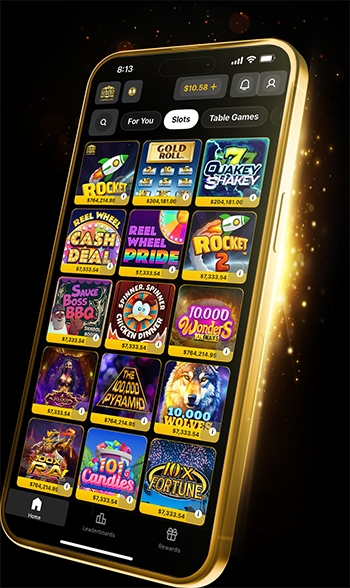
Match the casino transaction receipt against the line on your phone bill, not against your bank statement. The mobile provider shows the charge as a network top-up or premium service, whereas the casino receipt records the same amount as a deposit. A mismatch between the two usually means a timing delay instead of a missing payment; a difference in amount points to a currency conversion or an extra service charge.
No. A charge made to your mobile bill is final once the operator has accepted it, so a player cannot ask for a refund through the casino alone. The route back depends on the mobile provider’s own dispute process and on whether the charge was authorised by the account holder. Treat the deposit as spent before confirming it.
It does, at UK-licensed sites. Pay-by-phone is only one deposit route among many, and GamStop is enforced at the account level, not per method. A player who is excluded will be blocked before the mobile charge is accepted. Offshore sites that do not participate in GamStop are a different case, and their payment terms are not governed by UK self-exclusion rules.
Carrier billing slips straight onto your mobile bill, which blurs how much you have actually spent. Treat it like cash you have already parted with instead of a card balance to dip back into. Set a weekly figure before depositing, and record every charge against it in your phone’s spending app.
Consider the timing. A £10 top-up today appears on next month’s phone bill, so a £50 limit can quietly turn into several months’ worth of spending. If you cannot cover a bill when it arrives, treat that as a signal to stop using carrier billing instead of rolling the cost forward.
Keep your phone and casino accounts on different payment methods. This prevents one password leak or a lost phone from draining both your gambling budget and your daily funds at once. If you find yourself chasing losses, the quickest route to a pause is a self-exclusion through GAMSTOP; the GamCare and BeGambleAware National Gambling Helpline, 0808 8020 133, offers free help. The legal age to gamble in the UK is 18, and chasing losses is never a way to recover them.


